
Train the whole empty-goal possession—not just the extra attacker
What the IHF’s empty-goal announcement supports, plus a 30-minute club block for overload decisions, legal substitutions and recovery.
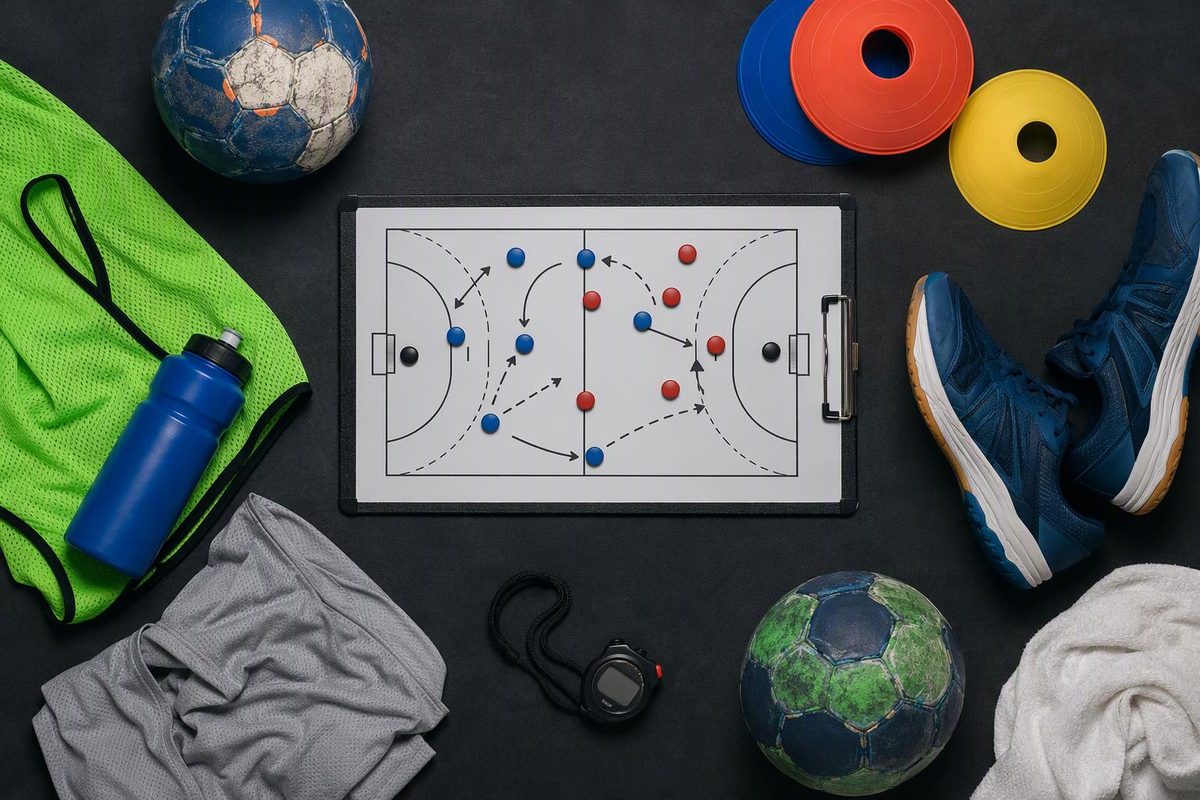
Train the extra-player attack, the goalkeeper exchange and the response to losing possession together. That is a useful club-coaching response to the IHF’s latest empty-goal analysis—not a finding that every team should play seven-on-six more often.
What the IHF announcement actually says
On 8 July 2026, the IHF announced a technical magazine devoted to the 2025 Women’s World Championship. It describes an empty-goal attacking study covering the championship’s 108 matches, reports that seven-on-six efficiency has improved over recent years, and identifies a separate contribution on improving attack quality without a goalkeeper. The 108 figure is the number of matches covered, not the number of empty-goal attacks. Source: IHF announcement.
That announcement supplies neither numerical effect sizes nor a club-training prescription. It does not establish that removing the goalkeeper will improve your squad’s results. Treat the elite women’s tournament analysis as a reason to practise and evaluate this option, not as a universal instruction to use it.
Seven-on-six means replacing the goalkeeper with an additional court player: seven court attackers against six court defenders, with your own goal unguarded. The opposition normally still has a goalkeeper.
Make the exchange part of the skill
Under the IHF indoor rules dated 1 July 2025, a team playing without a goalkeeper may have up to seven court players. A substitute must wait until the replaced player has left; both must use their own team’s substitution line. These requirements also apply to goalkeeper substitutions. A faulty substitution carries a two-minute suspension. Source: IHF Rules 4:1, 4:4–4:5.
For practice, agree three roles before starting:
- Caller: one attacker communicates when to bring the extra player on.
- Exchange player: one named attacker leaves so the goalkeeper can return.
- First recovery defender: another attacker reacts to the opponent’s possession rather than also running towards the bench.
Keep those roles fixed initially. “Whoever is nearest” can be a later progression, once players communicate reliably.
A 30-minute empty-goal training block
For: adult club players with established passing, shooting and controlled-contact skills.
You need: eight court players, two goalkeepers, a full court with two secured goals, bibs, balls and a coach. Run this after a progressive warm-up. Start with interception-only defence before introducing controlled contact.
This proposed block is a scaled four-on-three exercise, not an IHF-prescribed drill or a reproduction of seven-on-six spacing. It lets a small squad rehearse the overload and its consequences. Full seven-on-six needs seven court attackers, six court defenders and two goalkeepers if you want a live exchange and opposition goalkeeper.
1. Rehearse the exchange — 5 minutes
Use one goalkeeper and the designated extra attacker. Walk through goalkeeper off, attacker on; then attacker off, goalkeeper on. Use the court’s actual substitution line, not a convenient exit near the goal.
Repeat at jogging speed with a ball being passed by teammates. The incoming player watches the outgoing player clear the court—not just the caller’s signal.
Checkpoint: complete five consecutive legal exchanges without prompting. This is a practice target, not an IHF standard.
2. Find the spare attacker — 8 minutes
At one end, set four attackers against three defenders and a goalkeeper. Use two back players, a wing and a pivot—the attacker working near the six-metre line. The eighth court player observes; the other goalkeeper rests.
Play one possession at a time. Ask attackers to move a defender before releasing the ball, maintain width and look for an unpressured receiver. Do not require a fixed number of passes or reward merely keeping the ball.
Rotate roles every two possessions. The observer reports one thing: did the receiver catch ready to threaten goal, or have to stop and recover the pass?
Progression: begin with defenders protecting space, then allow interceptions and controlled contact. If catches break down, reduce pressure before adding speed; use the small-squad passing progression first if needed.
3. Add the exposed goal — 12 minutes
Start with three attackers against three defenders at the same end, with a goalkeeper in each goal. The extra attacker waits outside their own substitution line; the eighth court player observes.
On the caller’s decision, the attacking team’s goalkeeper leaves through their substitution line and the extra attacker enters legally, creating four-on-three.
Continue into the transition after a shot or turnover. The opponents may attack or shoot towards the exposed goal once they have possession, using the appropriate restart if the ball went out of play. The designated attacker exits so their goalkeeper can return; the other attackers recover defensively. After an attacking goal, the opponents restart with a throw-off rather than giving the attackers a free reset. Source: IHF Rules 10:2, 11–12.
End the repetition when the goalkeeper is back in position and the defence is organised, or when the opponents score. Reset and rotate the court-player groups every two repetitions, naming the caller and exchange player before restarting.
Watch: does the exchange player notice possession changing? Does another player pressure the ball legally? Is the goalkeeper returning under control, without collisions? Stop unsafe repetitions rather than rewarding a desperate recovery.
4. Compare and review — 5 minutes
Finish with a few three-on-three possessions with the goalkeeper staying in goal. This provides a discussion point, not a reliable statistical comparison with four-on-three.
Ask players which extra-player possessions produced a clear chance—and which simply added another receiver without improving the attack.
What to record—and the half-hall alternative
For each live empty-goal repetition, mark four simple items: attacking goal, turnover, legal return exchange, and goal conceded before the goalkeeper was set. Keep the attacking result beside the immediate defensive consequence. An attacking goal alone does not describe the whole sequence.
With half a hall, eight court players and one goalkeeper, use the four-on-three stage, rotate the observer, and rehearse exchanges separately. On a turnover, defenders try to pass through a cone gate near halfway while attackers recover; keep the outlet lane clear. That trains the response to losing the ball, but it does not test long empty-goal shooting or the goalkeeper’s full return journey.
Before using the tactic in competition, look for repeatable clear chances, legal exchanges and an organised recovery—not just a successful overload drill.