
What Coaches Get From Learn Handball’s Goalkeeper Plans
Check Learn Handball’s 17 goalkeeper exercises, youth age range and card-required trial, then test one video in a practical 15-minute club training block.
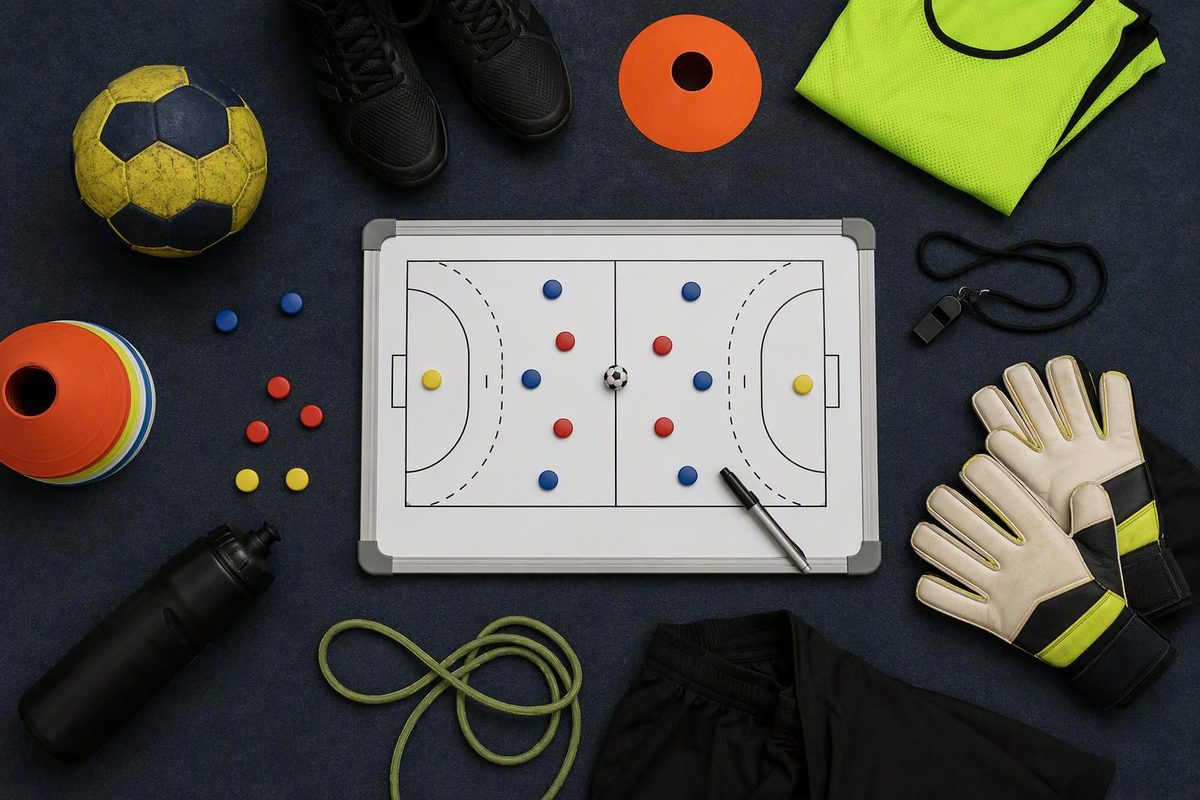
Learn Handball’s new goalkeeper content is a useful starting point for youth coaches without a specialist: it advertises dedicated training plans and now includes videos of 17 goalkeeping exercises with Mikael Appelgren. The release is intended to help general coaches understand and teach the position, not provide advanced goalkeeper training. Test whether one demonstration gives your keeper a clearer movement task before committing to a subscription.
Choose your keeper’s age group, station setup and movement readiness to find a suitable starting point.
Choose The Starting Stage
Start Without Shots
Use the 0–3 minute stage below: show the selected video, explain the task and rehearse its movement. Do not advance to throws until the keeper can move with control.
For throwing work: one feeder at a time, a full reset, predictable pace and placement, and no head targets. Stop for fear, pain or loss of control.
Source: the suggested club block below, not a Learn Handball plan; younger-player rotation guidance from IHF, section 8.3.
What The New Goalkeeper Content Includes
Learn Handball’s goalkeeper-content page advertises dedicated plans and video exercises. Across the platform, it describes season-long plans organised by age and skill level, video demonstrations for every exercise, and plan-sharing with co-coaches. Those platform-wide features do not establish the length or structure of every goalkeeper-specific plan.
The EHF’s 2 October 2026 announcement provides the specific release detail: Appelgren has filmed 17 dedicated goalkeeping exercises, available to all Learn Handball app users. These are the first contribution in a planned goalkeeper-coaching series. David Späth is named as the next contributor; that does not confirm that his full exercise collection is already available.
In the same announcement, Learn Handball co-founder Bjarte Myrhol describes the addition as helping coaches understand the position better, rather than advanced goalkeeper training. He also notes demand from teams without a dedicated goalkeeper coach. The strongest fit is therefore a general team coach who needs help explaining a movement and its purpose—not someone expecting a specialist programme from the release alone.
The Platform Targets Ages 6–16, With Exercise Selection Still Required
Learn Handball says its training plans and exercises are built for ages 6–16, with content filtered by age group. That is the platform’s stated range, not proof that every goalkeeper exercise suits every child within it. Start with the appropriate age filter, then check the movement, throwing demands and equipment against the keeper in front of you.
The provider says some coaches also use the platform with senior teams, but its primary audience is children’s and youth coaches. Senior use does not establish that the new collection offers advanced goalkeeper work.
For the youngest players, distinguish learning the role from specialising in it. The IHF’s school-teaching guidance, section 8.3, recommends rotating children aged 5–10 through goal, not forcing a fearful child to try it, and allowing club players to begin specialising around 10 or 11. A goalkeeper video can support that rotation without making one young child the permanent keeper.
The 14-Day Trial Requires A Payment Card
The advertised trial lasts 14 days and requires a payment card. Learn Handball’s goalkeeper-content page says nothing is charged until the trial ends and that you must cancel before day 14 to avoid payment. This is not card-free access.
The supplied release material does not provide a subscription price. Check the price, renewal terms and cancellation route during sign-up. The service works on web, iOS and Android, so you can preview an exercise before taking a phone or tablet to the hall.
Test One Video In A 15-Minute Club Block
This is a suggested integration block, not a reproduction of a Learn Handball plan. Use it after your team’s progressive warm-up with a willing beginner youth keeper, roughly ages 10–16.
You need one goalkeeper, six court players, one secured goal, half a court, suitable balls, cones, a phone or tablet and one coach. Preview the exercise before training. Choose a simple movement exercise whose setup fits those resources and whose demonstration includes controlled throws as a progression. If it needs extra equipment or specialist supervision, choose another.
Assign two court players as feeders. The other four work in two passing pairs in a clearly separated area, with no throws crossing the goalkeeper station. Rotate feeders halfway through the throwing work. Keep both stations in the coach’s view; if separation or supervision is inadequate, pause the passing pairs.
| Time | Action | Check |
|---|---|---|
| 0–3 minutes | Show the video, explain its purpose and rehearse the movement without shots. | Can the keeper repeat the movement and name the task? |
| 3–8 minutes | Run the simplest version, with one feeder at a time and a full reset between repetitions. | Does the keeper stay balanced and finish ready? |
| 8–13 minutes | If movement is controlled, follow the demonstrated throwing progression with manageable throws to an agreed area. | Can the keeper move without turning away or rushing? |
| 13–15 minutes | Repeat a few controlled attempts and ask what needs another demonstration. | Choose one cue for the next session. |
Keep speed and placement predictable initially. With mixed-level shooters, assign placement and pace explicitly rather than asking everyone to shoot “normally”. The feeder’s task is to make the chosen movement possible, not to win a shooting contest.
Do not aim at the head, introduce rapid-fire shooting or force unfamiliar diving or extreme-range movements. If the keeper shows fear, pain or loss of control, stop the throwing work rather than pushing through.
For a longer practice with outlets and live decisions, use our 65-minute goalkeeper session.
Judge The Trial By Coaching Clarity, Not Save Count
Choose one priority, repeat it across two practices, and check whether the videos help you explain and correct it. Keep brief notes on balance, readiness and confidence—not just saves, which also depend on your feeders’ accuracy and speed.
Before subscribing, confirm that the actual plans fit your player count, space and available coaching attention. A useful trial outcome is being able to select an appropriate exercise, explain its purpose and identify when to simplify it. More videos alone do not solve the problem of an unsupervised goalkeeper station.
There is also a free EHF webinar scheduled for 12 October 2026, 16:00–17:00 CEST, with David Späth and moderator Bjarte Myrhol. Its announced topics include children’s goalkeeper training, foundations, long-term development and mental demands. Registration is available through the EHF webinar announcement. Take a specific coaching question: how to progress a young keeper when there is only one goal and no specialist available.