
What Is a Handballer?
A handballer is a handball player. Learn what the term means, what team-handball players do, and a simple way to introduce beginners to the game.
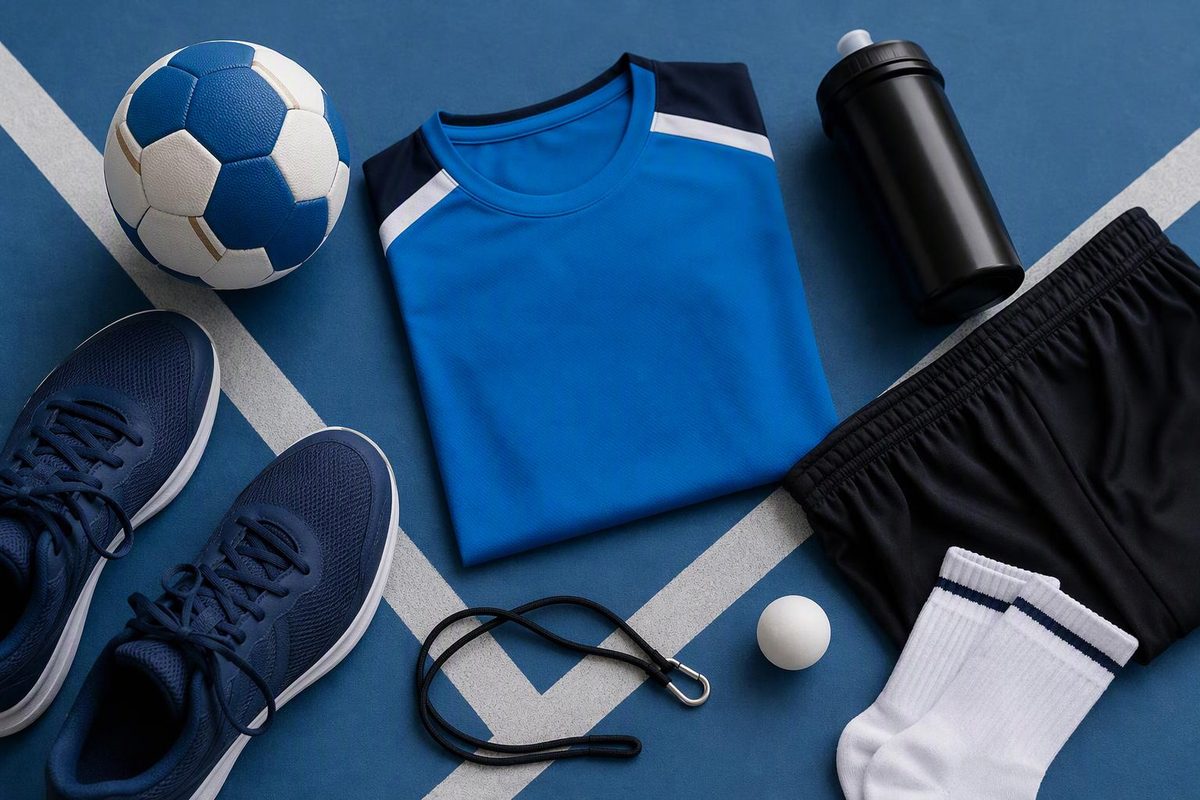
A handballer is a person who plays handball. It is another word for “handball player,” not a particular position or qualification. Dictionary.com defines it as a handball player, especially a member of a professional team—but the term is not restricted to professionals.
Here, we mean a player of team handball: the goal-based sport in which players pass, dribble and throw a ball with their hands.
Which kind of handball?
The context matters because two different sports share the name:
- Team handball, also called Olympic handball, involves teams trying to throw the ball into the opposing goal.
- Wall handball involves striking a small rubber ball against a wall or walls with the hands, in singles or doubles.
Both have handball players; “handballer” alone does not tell you which version someone plays. Dictionary.com’s handball entry explains the distinction. This site focuses on team handball.
What does a team handballer do?
A standard indoor team normally has six court players and one goalkeeper on court. Court players help create shooting chances, score, defend and move between attack and defence. The goalkeeper protects the goal and can also participate outside the goal area. Olympics.com’s game guide introduces these basics.
For a newcomer, the first useful skills are catching, accurate passing, moving into space and choosing when to pass, dribble or shoot. Shooting is only one part of playing: a player without the ball still needs to offer a passing option or help defend.
Three rules give beginner court players a starting framework:
- Hold the ball for no more than three seconds.
- Take no more than three steps while holding it.
- After gathering a dribble, pass or shoot within those limits; do not start another dribble unless the ball has touched another player or the goal.
These limits come from Rule 7 of the IHF indoor rules, dated 1 July 2025. They do not apply to a goalkeeper moving with the ball inside their own goal area. For more detail, see our European handball rules guide.
Introducing a new handballer at club training
For six adult beginners, try this 10-minute block after a warm-up. Use one ball per pair initially, then one ball for the game, with cones marking a roughly 12 × 10 m space in half a hall. Include a 2 m-deep end zone at each end and leave clear space outside the boundaries.
First three minutes: pass in pairs. After each pass, move a few steps to offer a new receiving position. Keep throws controlled and distances comfortable.
Next seven minutes: play 3 v 3. Score by passing to a teammate who catches inside the attacking end zone. Allow interceptions but no body contact. Use the three-step and three-second limits; make this a no-dribble practice game, not a full match. After a score, the other team restarts from its own end zone. On a dropped pass or a ball going out, give possession to the opponents at that spot or boundary.
Watch for: receivers looking before the catch and passers moving afterwards. If catches repeatedly fail, have defenders walk and intercept passes only before adding speed. For a longer progression, use our passing drills for small squads.